Sponsor the ISAE-SUPAERO
Mars Analog Mission
MDRS Crew 2027 • February 2027 • Utah Desert, USA
Our History
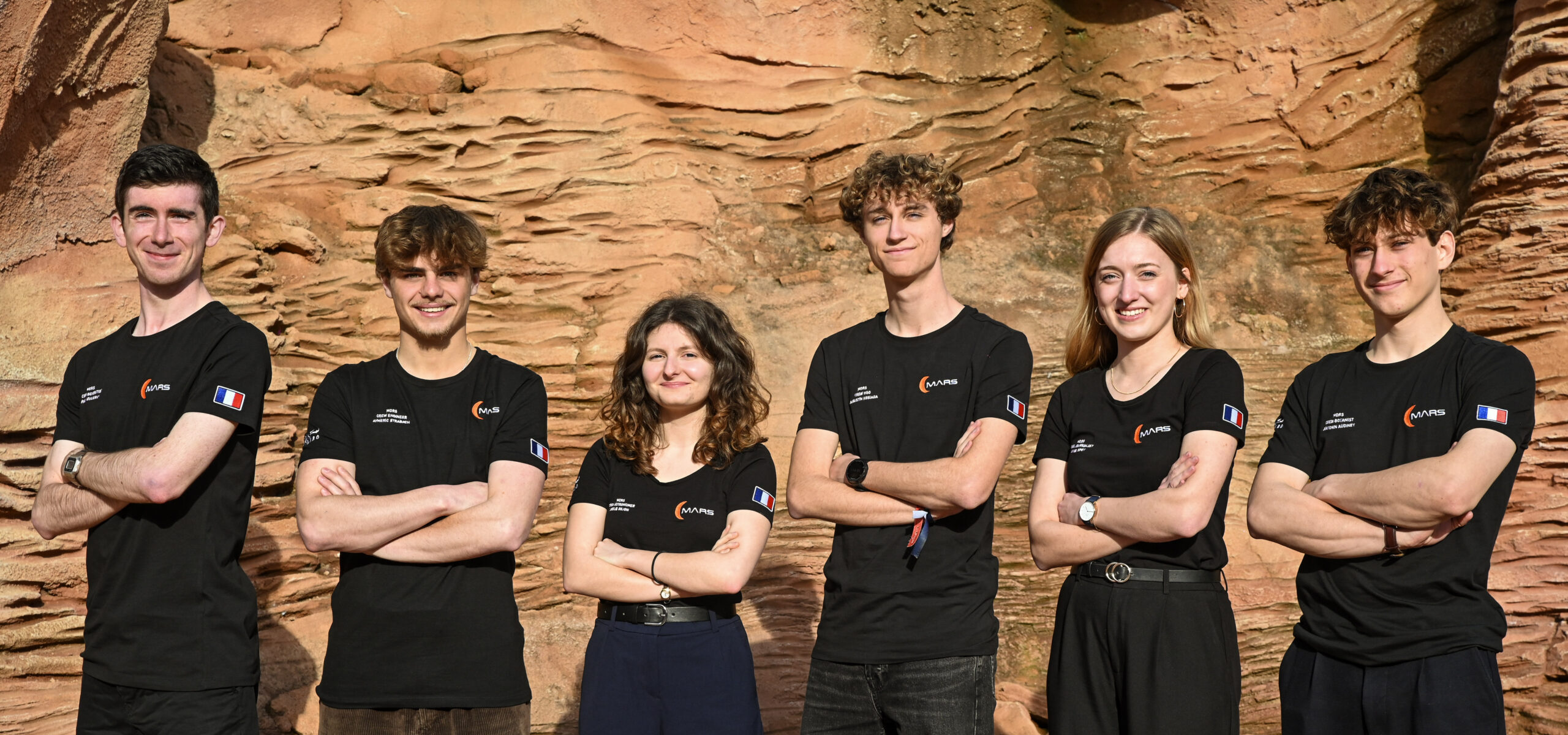
In 2014, students from ISAE-SUPAERO, accompanied by Professor Stéphanie Lizy-Destrez, established a team dedicated to preparing for the future of human space exploration. For 12 years, the Institute has sent a crew every year to the Mars Desert Research Station (MDRS) during the same period, a unique mission in France and still a rare initiative in Europe.
In February 2027, seven students will fly to the Utah desert in the United States to conduct a four-week analog mission at the MDRS. Isolated under conditions similar to those that future astronauts will face on Mars, the crew will carry out scientific experiments and technology demonstrations across a wide range of disciplines.
About the MDRS
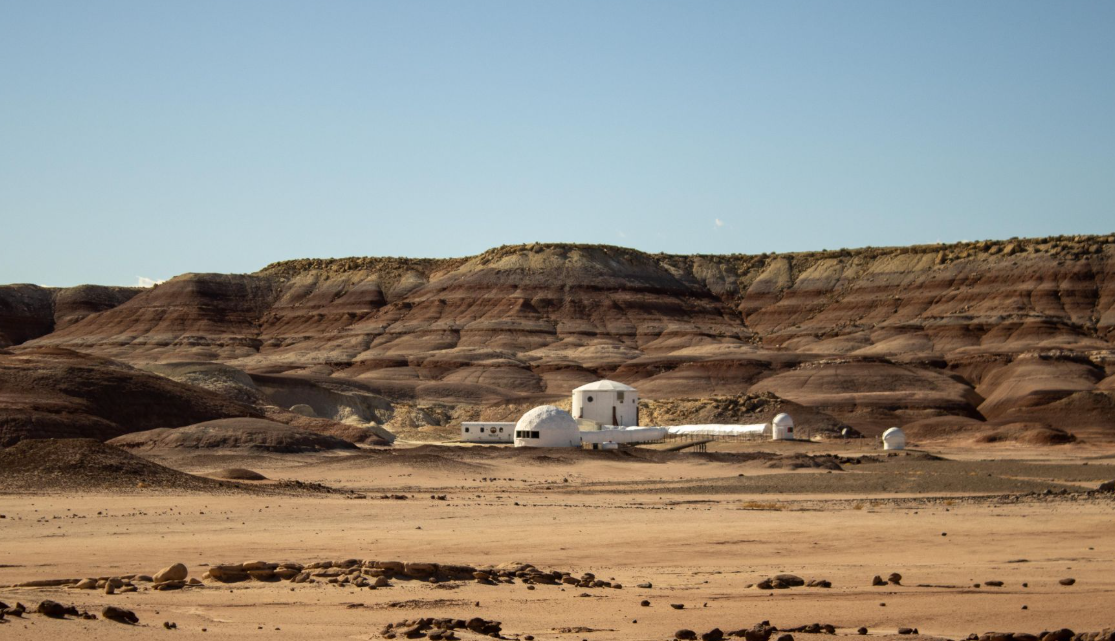
The Mars Desert Research Station is the largest and oldest research facility in the world dedicated to simulating life on Mars. The infrastructure is managed and operated by the Mars Society.
Major Media & Institutional Partnerships
Cité de l’Espace & France TV Studio


This mission benefits from exceptional visibility and high-impact media partnerships:
- Cité de l’Espace Partnership: The documentary made by our crew’s mission journalist will be officially screened at the Cité de l’Espace during a special weekend event, with 10,000 visitors expected to attend.
- France TV Studio Production: A professional documentary covering our analog journey and scientific endeavor is being produced in collaboration with France TV Studio, ensuring national scale broadcasting and institutional reach.
Cutting-Edge Research & Experiments
Every year, the crew collaborates with leading international space agencies and research centers to run complex protocols spanning human factors, atmospheric physics, geology, botany, technology, and space medicine :
Orbital Architecture & Human Factors

This study monitors brain activity, stress levels, and sleep quality to evaluate how space habitat design impacts mental and physical well-being. This exact experiment was conducted by astronaut Marcus Wandt on the International Space Station (ISS) in 2024 during the Axiom-3 mission.
EchoFinder (Autonomous Medical Imaging)


An AI-powered medical system designed to help astronauts perform high-quality ultrasounds autonomously using augmented reality. EchoFinder is being deployed on the ISS by French astronaut Sophie Adenot during the Epsilon mission.
Atmospheric Physics (LOAC / Mega-Ares)


Using specialized sensors, the team measures airborne particle concentrations and atmospheric electric fields. These instruments help refine physical models to better understand Martian dust devils, which pose a severe hazard to future human expeditions.
AMAIA (Autonomous Life Support AI)
Testing a local, internet-independent AI system operated via a custom smartwatch. AMAIA reduces crew mental workload by processing voice commands to retrieve data, manage life support systems, and log daily schedules in extreme isolation.
Public Awareness & STEM Outreach
A core objective of the mission is to inspire the next generation to pursue careers in space and sciences, encouraging them to push boundaries even further. Working in close collaboration with the CNES Proximars initiative and the OSE l’ISAE-SUPAERO social diversity program, the crew fulfills this mission through specific educational actions :
- Lectures & Conferences: Presenting the mission at various conferences in France and abroad to students ranging from primary school to high school levels.
- Promoting Diversity: Actively showing young girls, who remain underrepresented in these sectors, that science, technology, engineering, and mathematics careers are fully open to them.
- Scientific Method Engagement: Involving school students directly in hands-on experiments, such as growing cress seeds in highly saline soil to simulate the hostile and demanding surface conditions found on Mars.