SOL 1 : First steps on Mars
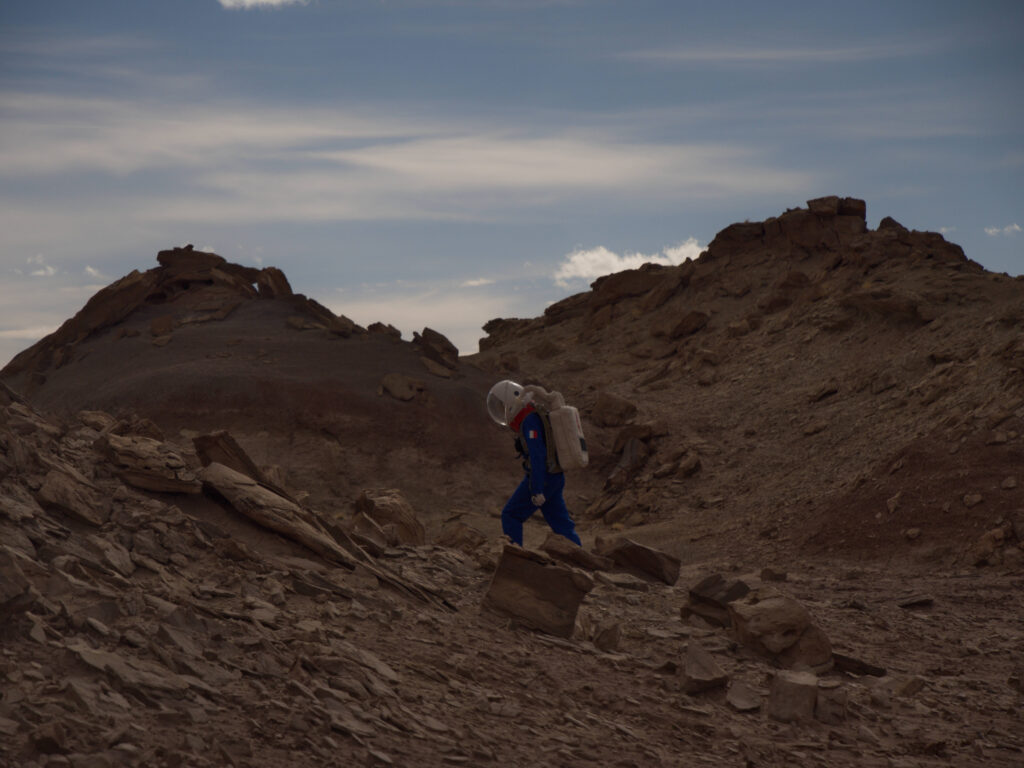
This morning was our very first one on Mars. After a brief night, we experienced the feeling of waking up on a different planet for the very first time. The main goal of the day: taking our first steps on Mars.
First, Julien and Lou set up the Core Data collection upon waking at 7:30 am. We collect physiological data every morning to analyze potential changes throughout the simulation. After having breakfast, we met on the lower deck of the HAB, where Gaspard explained the planning for our very first sol and briefed us on our initiation extravehicular activity (EVA).
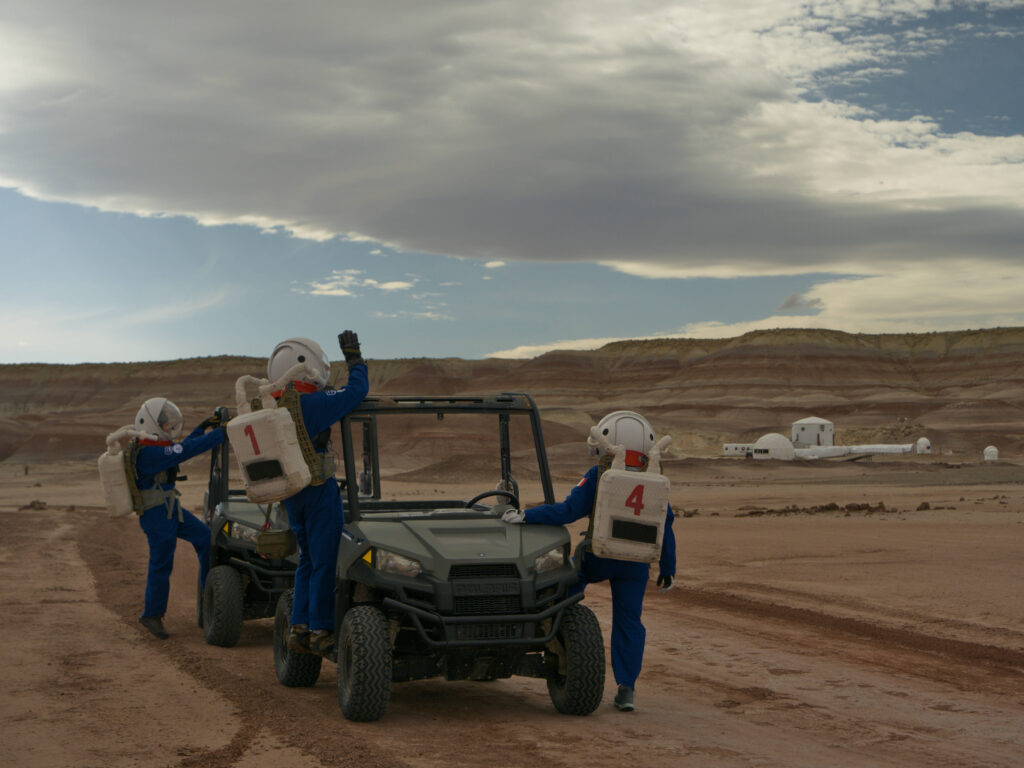
This morning, Adèle, Julien, and Félix went out. Before being able to exit the station, they set up radios so that they could communicate while being outside in their spacesuits. This is also how they stay in touch with the HabCom, who stays within the station and supports the team during their EVA. Gaspard took on this position this morning. Once they were equipped with their spacesuits, they entered the airlock and remained inside for five minutes. This is a mandatory step to go out safely on Mars, where pressure is much lower than inside the station, without danger.
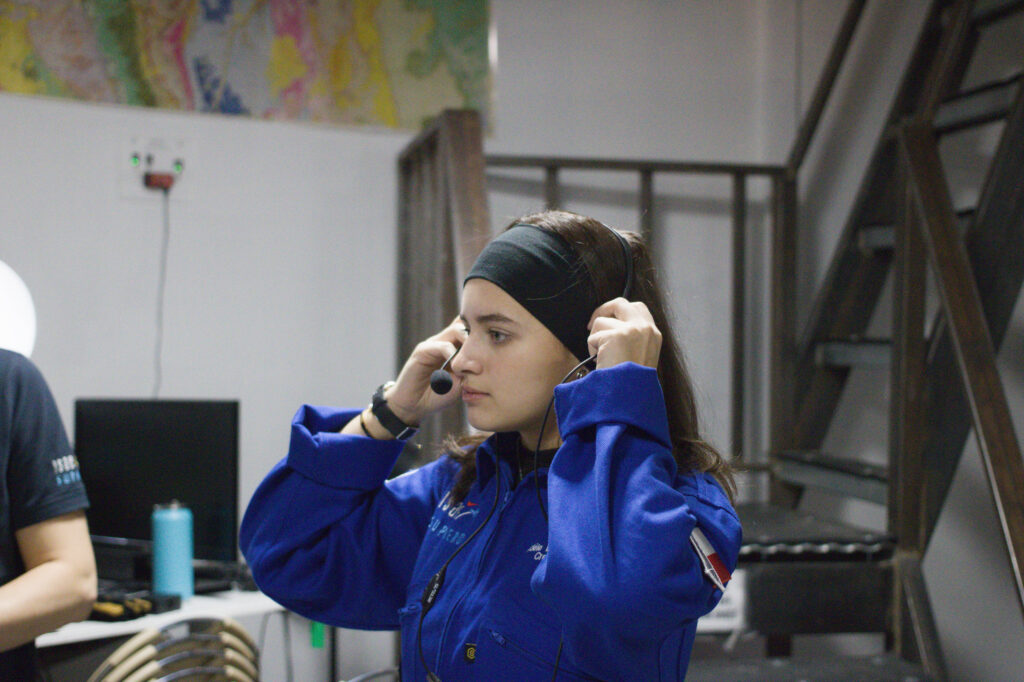
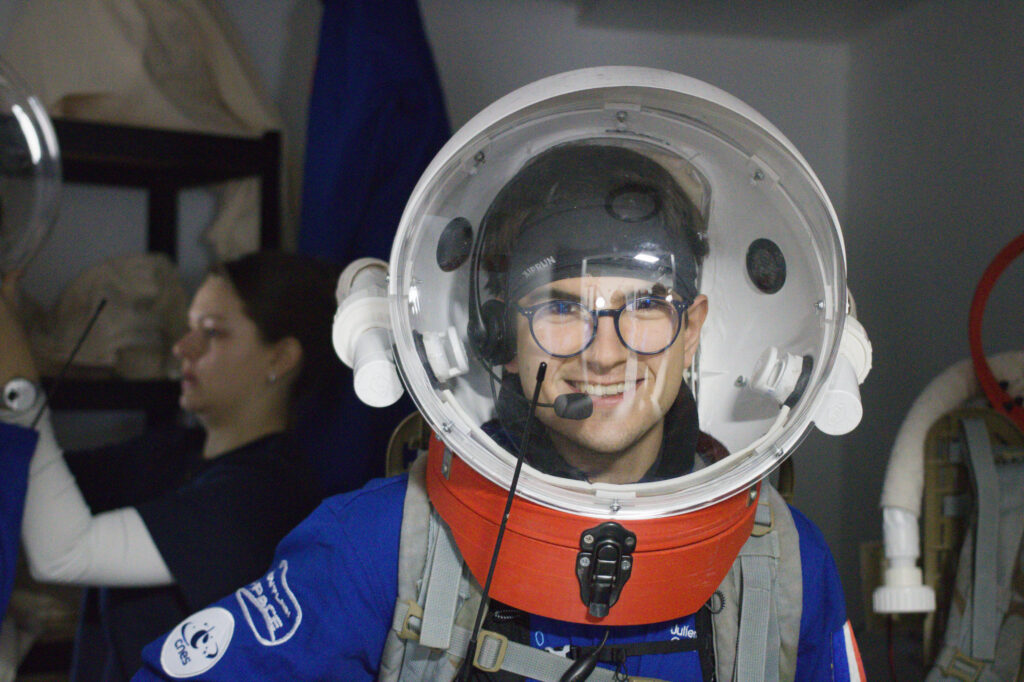
While they were outside, Lou set up the 3D printer while Célia was preparing the Lab’Ex printing, one of our new experiments this year. It consists of analyzing rock composition through spectroscopy measurements and is derived from Star’Ex, which analyzes star composition in a similar way.
With support from Gaspard, I began to install AMAIA, the astronaut life support artificial intelligence developed by Spaceship FR. We don’t have access to an internet connection except during communication windows, where we can consult our emails to contact our support crew. During the day, we therefore use AMAIA, which works as a standalone application. It allows us to ask questions to a chatbot, upload documents to a local drive, and manage station sensors and our planning. We all have a personal AMAIA tailored to our personal needs and requests.
After spending one hour outside, Adèle, Julien, and Félix came back with large smiles on their faces, demonstrating the magnificent moment they had just experienced. Without revealing the details of their first EVA, they made us understand that they really felt like they were on Mars and that they were left speechless.
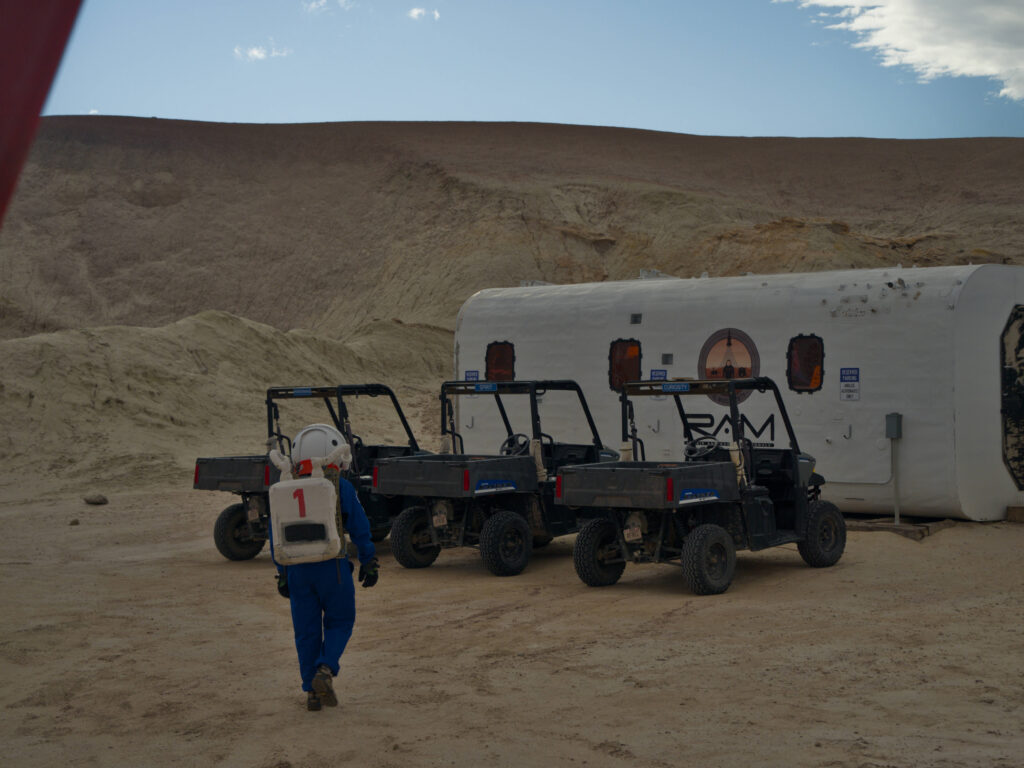
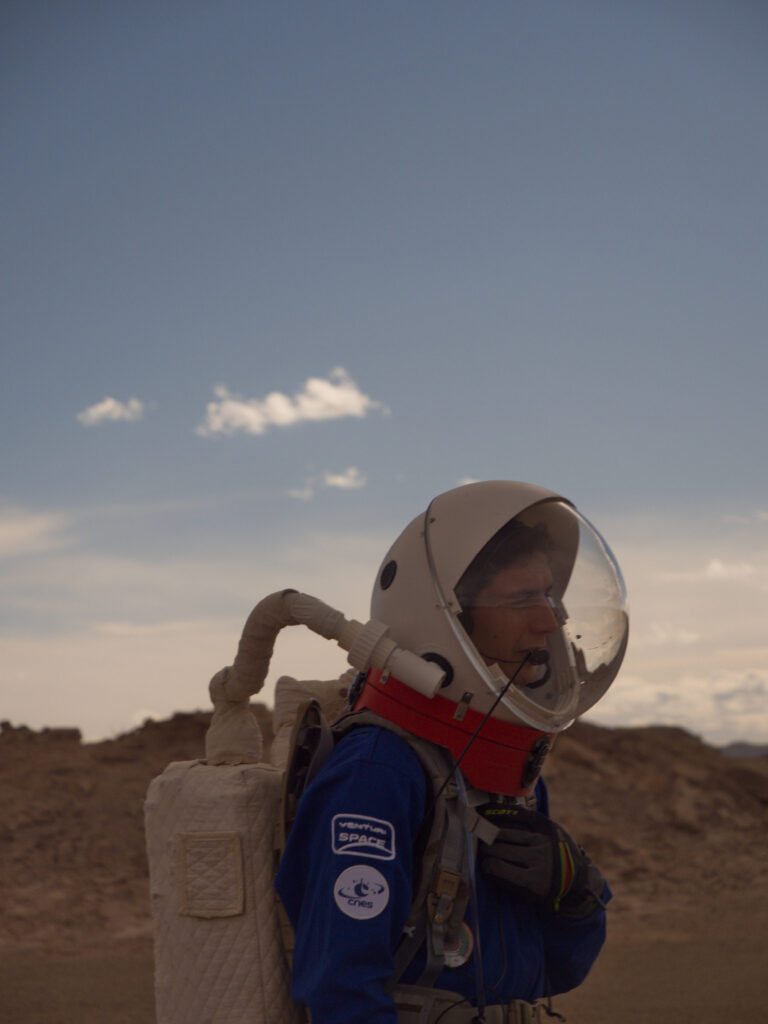
After lunch, it was our turn to undergo the initiation EVA, with Gaspard, Célia, and Lou. We followed the same protocol to be ready to leave the station. Then Julien, our HabCom, let us know that we could go outside. The door opened, revealing a totally different world. This moment was both breathtaking and immersive. We felt a mix of emotions that are tough to describe in words.We went to a place called Marble Ritual with the rovers. We individually chose a rock and put it in a basket in a symbolic manner. Then, we went back to the station on Julien’s command, who told us that the wind was too violent to continue the EVA. A storm is expected tomorrow, and we don’t know if we are going to be able to go out yet. Like the morning group, we went back to the station with huge smiles, eyes full of memories, and a sense of amazement at having experienced this.
During the EVA, Adèle and Félix started to install all the GPS sensors for the Orbital Architecture experiment. This experiment, in cooperation with KTH, aims to evaluate the influence of the environment on cognitive performance. We will have some tasks to conduct in different places of the station while physiological sensors and GPS provide information to researchers about our stress and our environment. They were able to set up the entire station despite a sensor that stopped working and some cable optimization issues.